Why the grain carts went to the town hall
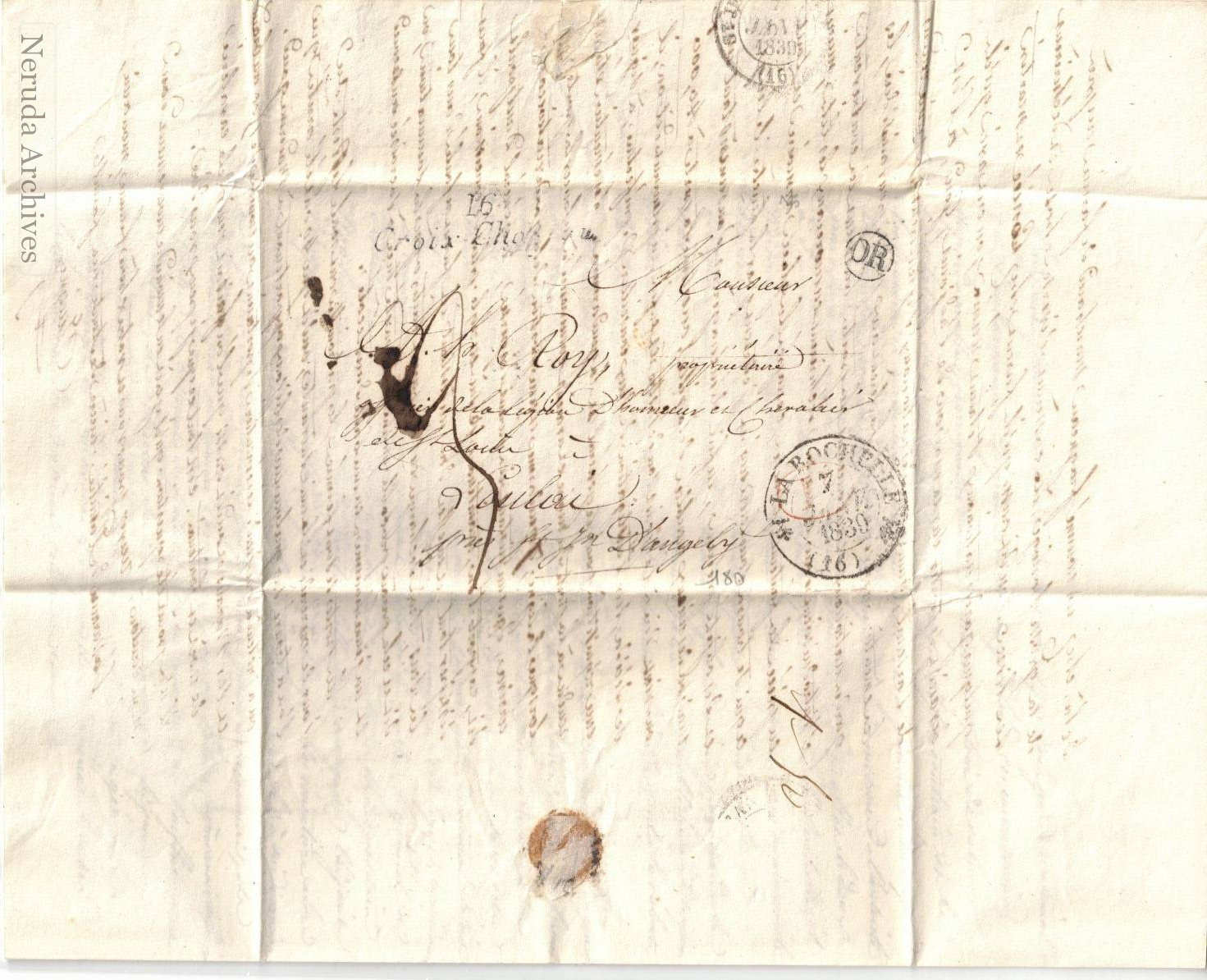
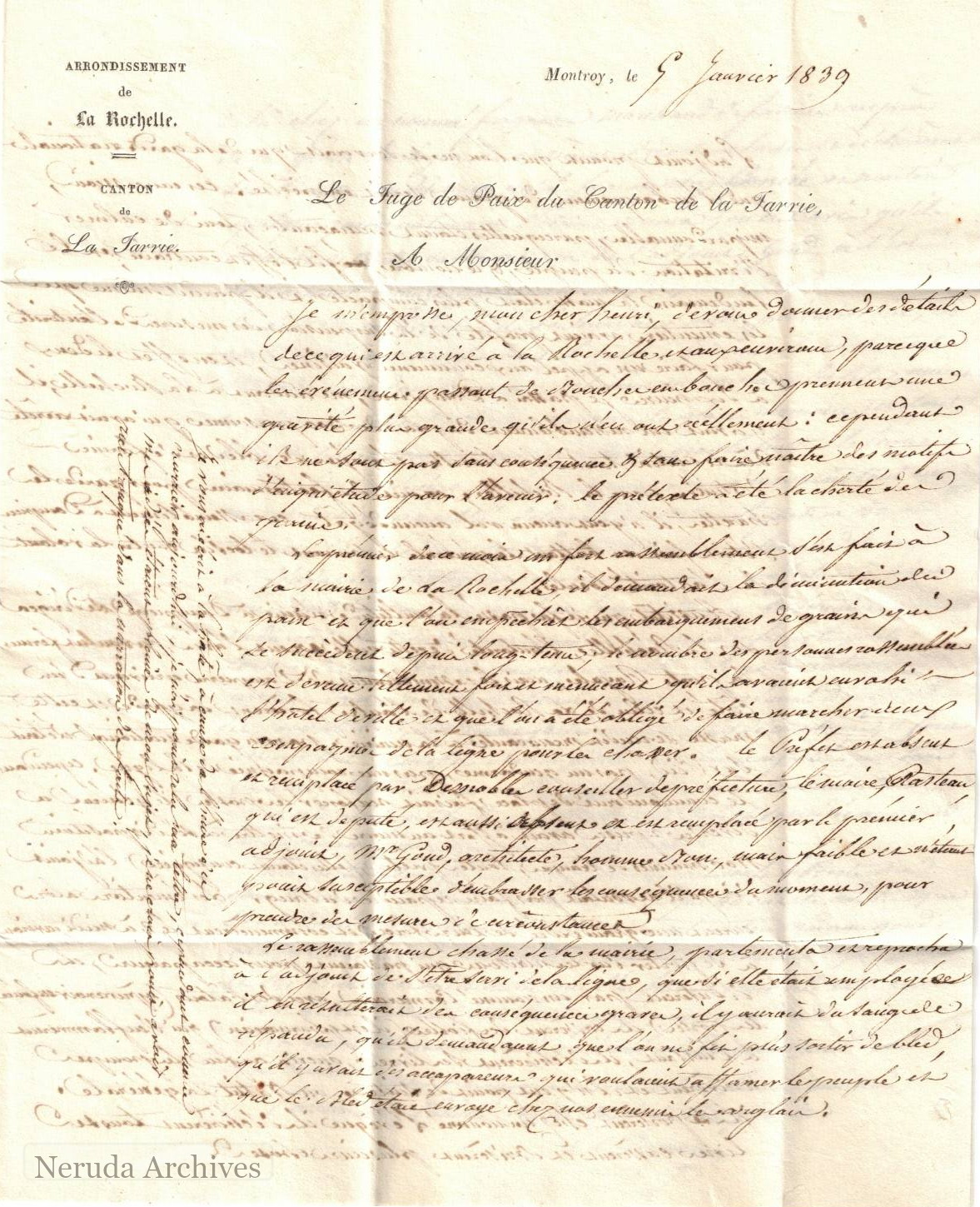
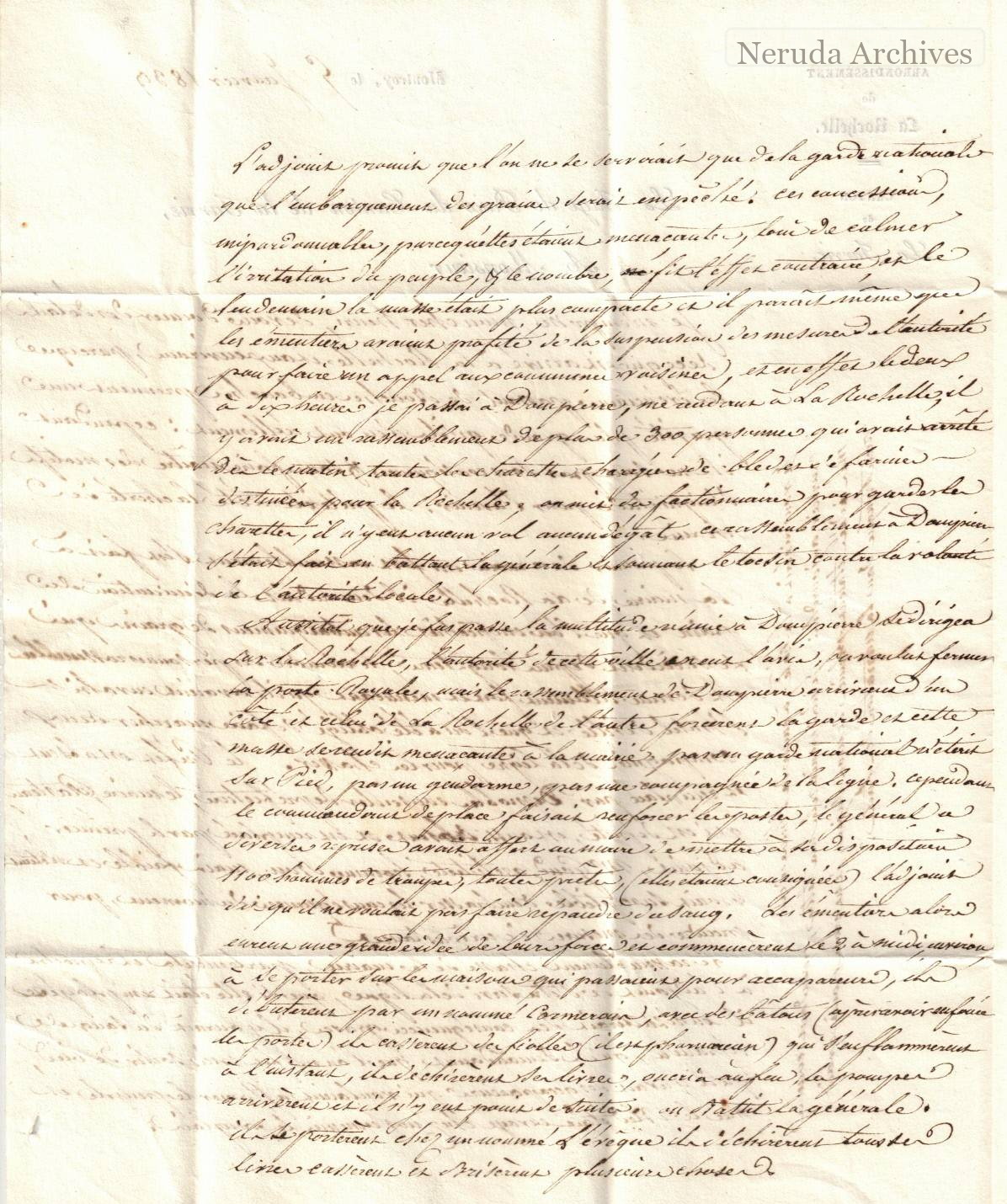
The crowd's demands were linked: it wanted cheaper bread and a halt to grain shipments out of La Rochelle. The indictment later added a dispute over the wages of the porters who unloaded the wheat. It described carts being taken to the town hall on 1 January 1839 and merchants accepting an eight-day pause in shipments. The letter brings the story out of the city: passing through Dompierre on 2 January, Guigne says he saw people holding back carts bound for La Rochelle and reports no theft or damage there. According to the indictment, some of those who gathered at Dompierre then joined the crowds in the city.[1, 2]
The officials named in the accounts
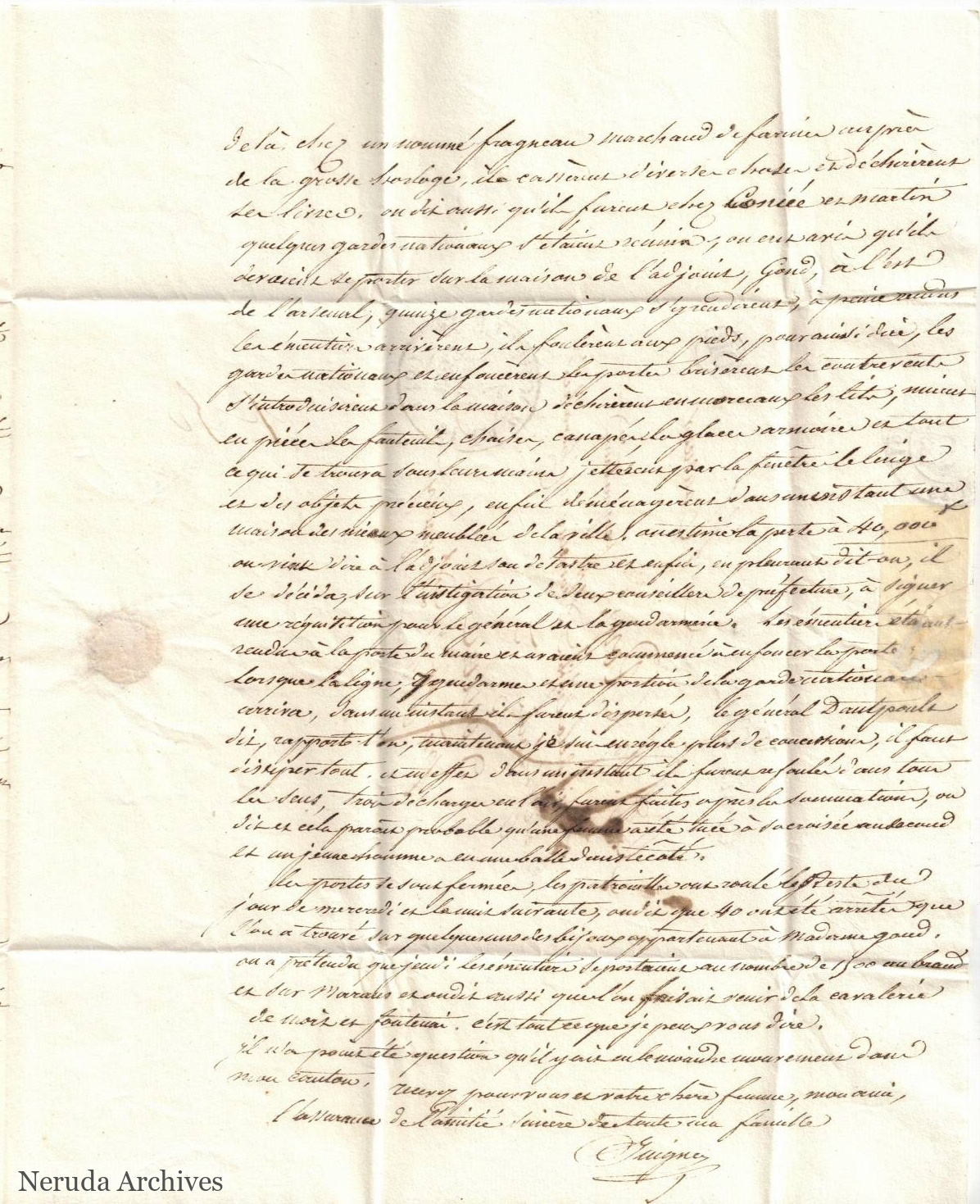
The mayor and parliamentary deputy was Jean-Jacques Rasteau. The first deputy mayor whose home was attacked appears as Jean-Charles Gon in the report of the hearings at Saintes. Gon gave evidence at that trial, as did the comte d'Hautpoul, the general named in the letter. Guigne wrote privately within days, while Gon and d'Hautpoul were giving their accounts months later, in court. Their testimony allows readers to compare the letter's account of how the civil authorities called in the troops with what the officials themselves said they did.[1, 3, 4]
Guigne relays the report of a woman killed at her second-floor window, but does not say he witnessed it. A dispatch from La Rochelle dated 6 January, printed in the Liège newspaper Le Politique, put her one floor lower and said she was trying to close her shutters. The indictment and d'Hautpoul's testimony also report a woman killed at a window, but do not give the same account of the firing. Taken together, the sources corroborate the death without resolving the precise circumstances.[1, 2, 3, 5]
Evidence and limits
Neither the early reports nor the later newspaper account of the trial gives a complete list of casualties. The woman's name and the full identities of Guigne and his correspondent Le Roy remain unconfirmed. The La Rochelle library also catalogues a separate account of the trial, available for further research under shelfmarks 2851 B and 14 231 B.[1, 2, 3, 5, 6]
Sources & evidence (6)
- Primary source: manuscript Neruda Archives, NRA-L-000006, Guigne to Monsieur Le Roy, Montroy, 5 January 1839, address panel and letter pp. 1–3. Read the letter and address Gives the price and export demands, the report from Dompierre, the account of the officials, and the writer's qualification of information about the shooting.
- Primary source: newspaper printing the indictment Gazette des tribunaux, 17 May 1839, “Affaire des troubles de la Rochelle,” Court of Assizes of Charente-Inférieure, Saintes, pp. 722–723. Read the indictment in the Gazette Summarises the demands over porters' wages, grain exports and bread; describes the carts and pause in shipment, the march from Dompierre and the shooting.
- Primary source: contemporary court reporting Gazette des tribunaux, 7 June 1839, “Affaire des troubles de la Rochelle,” report on the hearings at Saintes, 20 May–4 June 1839. Read the testimony reported after the trial Names the first deputy Jean-Charles Gon and reports the evidence of Gon, the second deputy Émile Labretonnière and the comte d'Hautpoul, including the death of a woman at a window.
- Parliamentary biographical record Assemblée nationale, Base de données des députés français depuis 1789, “Jean-Jacques Rasteau.” Check the mayor's parliamentary biography Identifies Jean-Jacques Rasteau and records that he became mayor of La Rochelle in 1834 and was elected deputy in 1837.
- Primary source: contemporary newspaper Le Politique (Liège), 12–13 January 1839, p. 1, dispatch dated La Rochelle, 6 January, Université de Liège, DONum. Read the January dispatch (PDF, p. 1) Reports a woman's funeral and says she was struck while trying to close her first-floor shutters. It does not name her.
- Official library catalogue Médiathèques de l'agglomération de La Rochelle, Cour royale de Poitiers. Assises extraordinaires de Saintes. Affaire de La Rochelle [1839], 59 pp., shelfmarks 2851 B and 14 231 B. Find the separately printed trial account Identifies a separate print source for this case. Only the catalogue notice, not the print volume itself, was consulted.