A burial request and a family connection
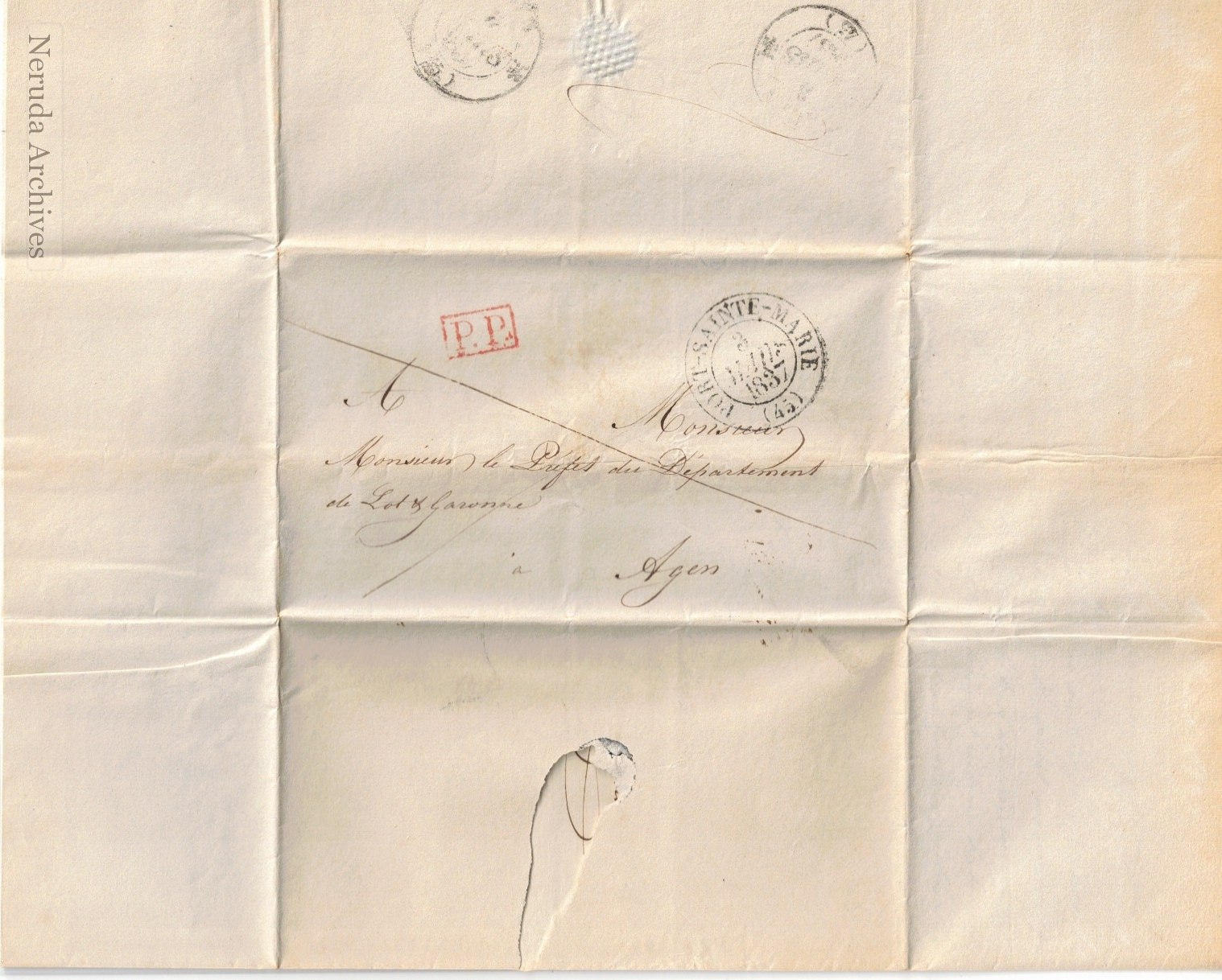
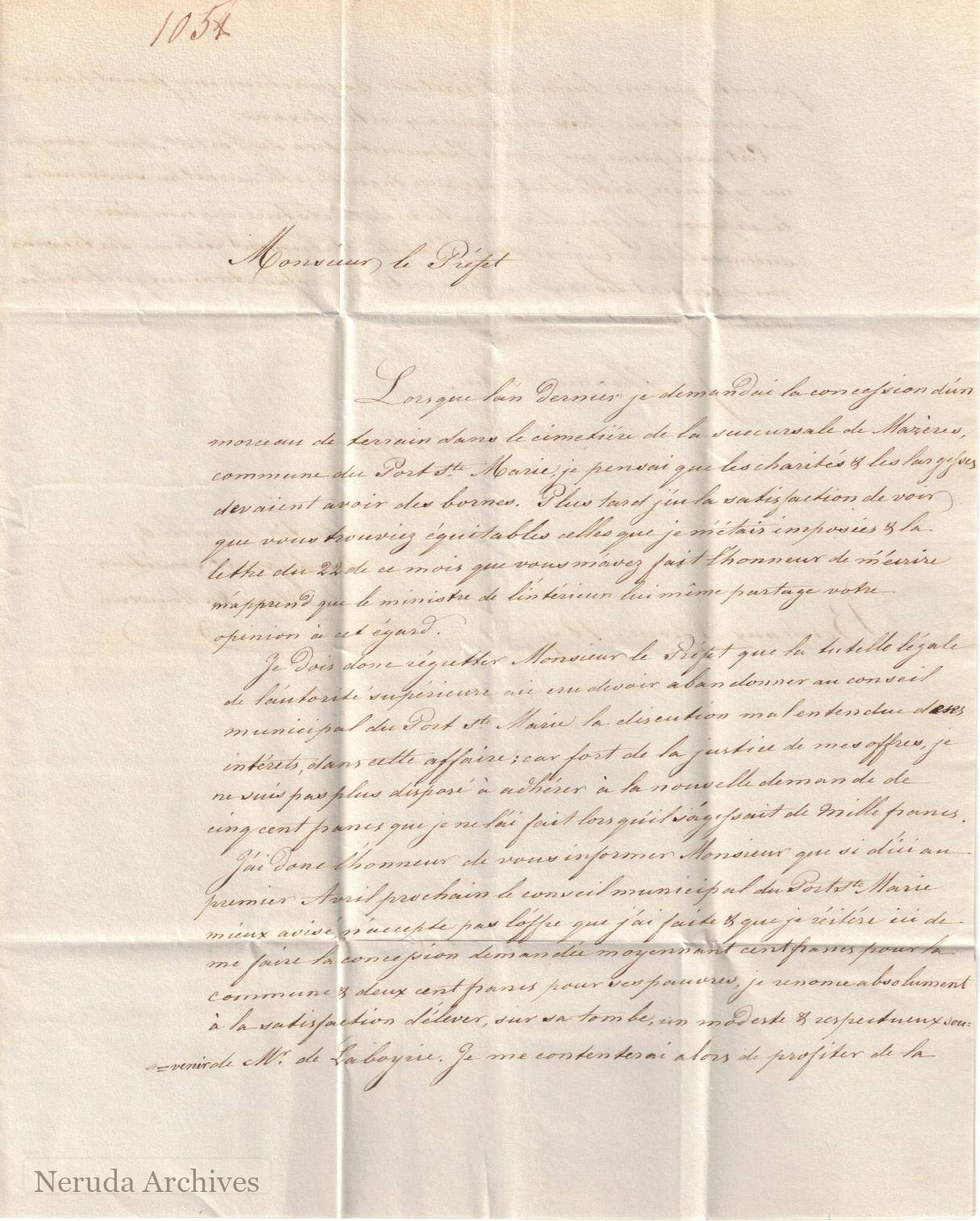
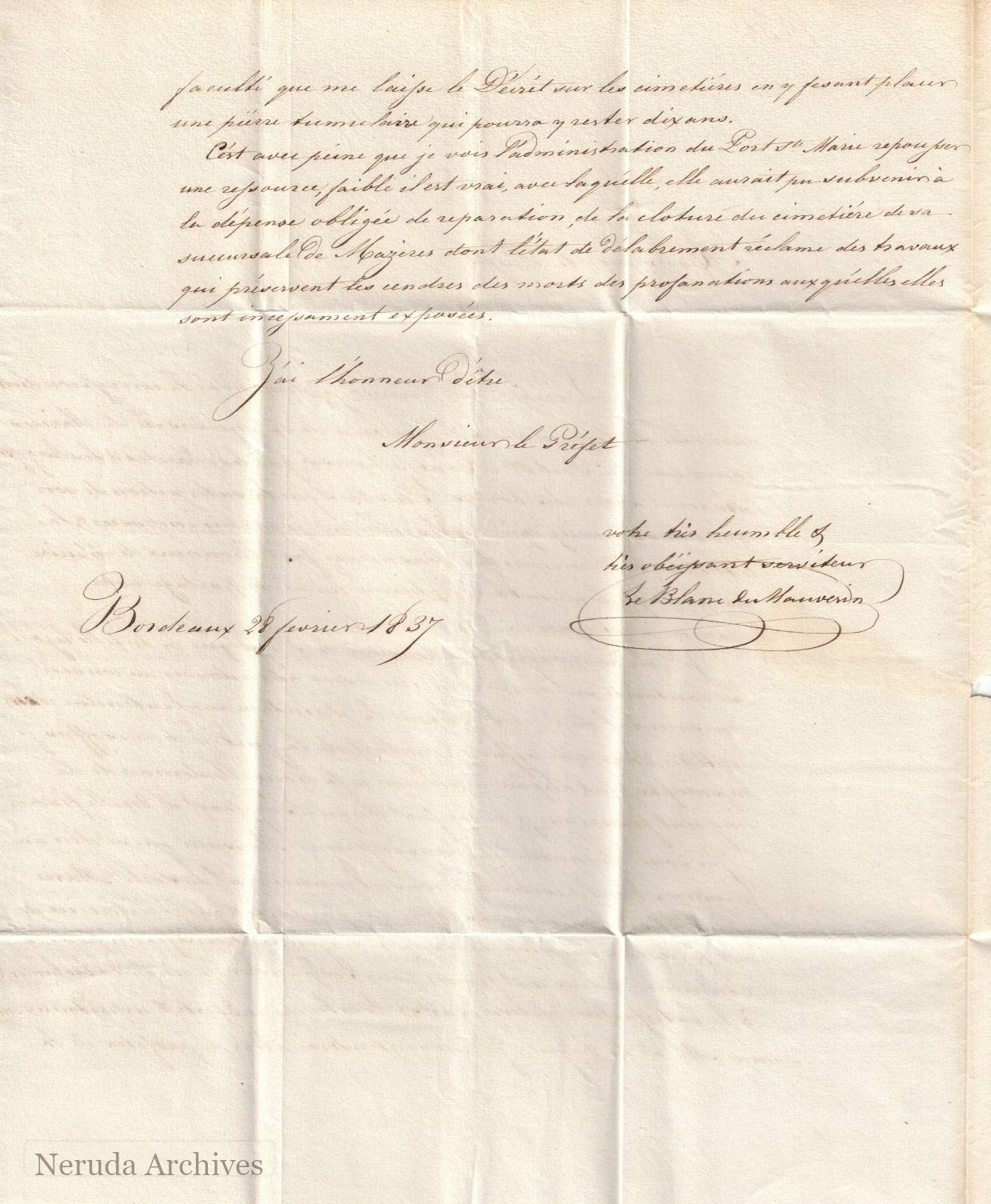
This letter of 28 February 1837 asks the prefect of Lot-et-Garonne to intervene in a request for a separate plot in the cemetery of the subsidiary parish of Mazières, within the commune of Port-Sainte-Marie. The writer says that the commune first demanded 1,000 francs and later 500 francs. He instead offers 100 francs to the commune and 200 francs to the poor, so that a memorial to Mr de Laboyrie may be placed there.[1]
People and relationships
The writer can be identified as Clément-Hippolyte Leblanc de Mauvesin. The available evidence strongly indicates that the deceased was François de Laboyrie (1755–1836), father of Marie-Joséphine de Laboyrie, who married Leblanc de Mauvesin in 1814. If correct, this identification makes the deceased the writer's father-in-law. This identification is supported by a published study of the Laboyrie family and by the agreement of names, dates and family relationships; it has not yet been confirmed by a burial record from Mazières.[1, 3, 4]
Legal setting
The decree of 23 Prairial Year XII (12 June 1804) provided the principal legal framework for French cemeteries. Article 10 allowed communes, where space permitted, to grant separate plots for family graves, vaults, monuments and tombstones. Article 11 linked such a concession to a gift for the poor or hospitals together with a separate sum for the commune. The two sums offered in the letter follow that same structure.[1, 2]
If the commune refused his offer, the writer intended to put a stone on the grave instead. Article 12 preserved the right to place a stone or other marker on the grave of a relative or friend without seeking permission. It did not require a separate concession, and it did not set a ten-year term. The basis for the ten years mentioned in the letter remains unverified.[1, 2]
Evidence and limits
The family identification is strongly supported but remains one step short of direct confirmation by a burial record. The final municipal decision and any applicable local tariff have not been located. The sums of 1,000 and 500 francs are therefore reported as the writer's account of the commune's demands, not as independently verified or legally assessed charges.[1, 3, 4]
Sources & evidence (4)
- Primary source · manuscript Neruda Archives, NRA-L-000010, images 2–3 and reviewed transcript of the letter dated 28 February 1837. View the archive record Supports the request, place, sums and the reference to Mr de Laboyrie.
- Primary source · legislation Décret impérial sur les sépultures du 23 prairial an XII (12 June 1804), Articles 10–12, reproduced in Ministère de la Culture, Cimetières et patrimoine funéraire, annex 3, p. 356. Read Articles 10–12 in the published decree Gives the rules for separate burial concessions and the distinct right to place a marker on a relative's or friend's grave without permission.
- Scholarly study Pascale Tauzin, “La famille de Laboyrie. Histoire d’un patrimoine en Bazadais (1570–1836),” Les Cahiers du Bazadais 79 (1987), pp. 3, 5 and 10, including the genealogical table. Documents François de Laboyrie's death in 1836, Marie-Joséphine's parentage and her 1814 marriage to Clément-Hippolyte Leblanc de Mauvesin.
- Archival finding aid Archives départementales de la Gironde, series 4 O, Bazas: administrative records concerning bequests by François de Laboyrie, 1837–1838. View the archival description Provides independent archival evidence for François de Laboyrie's posthumous charitable bequests in the same period.