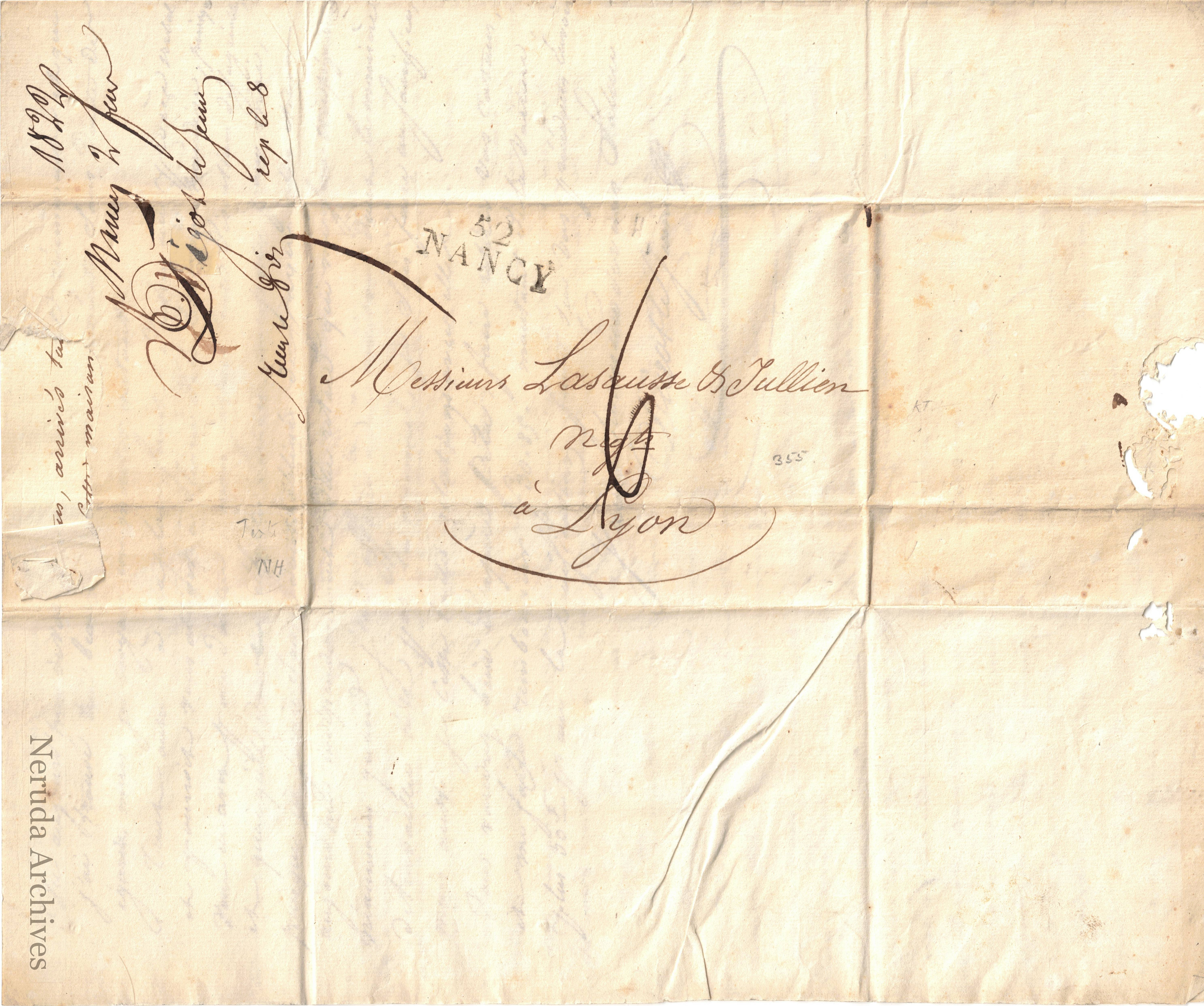
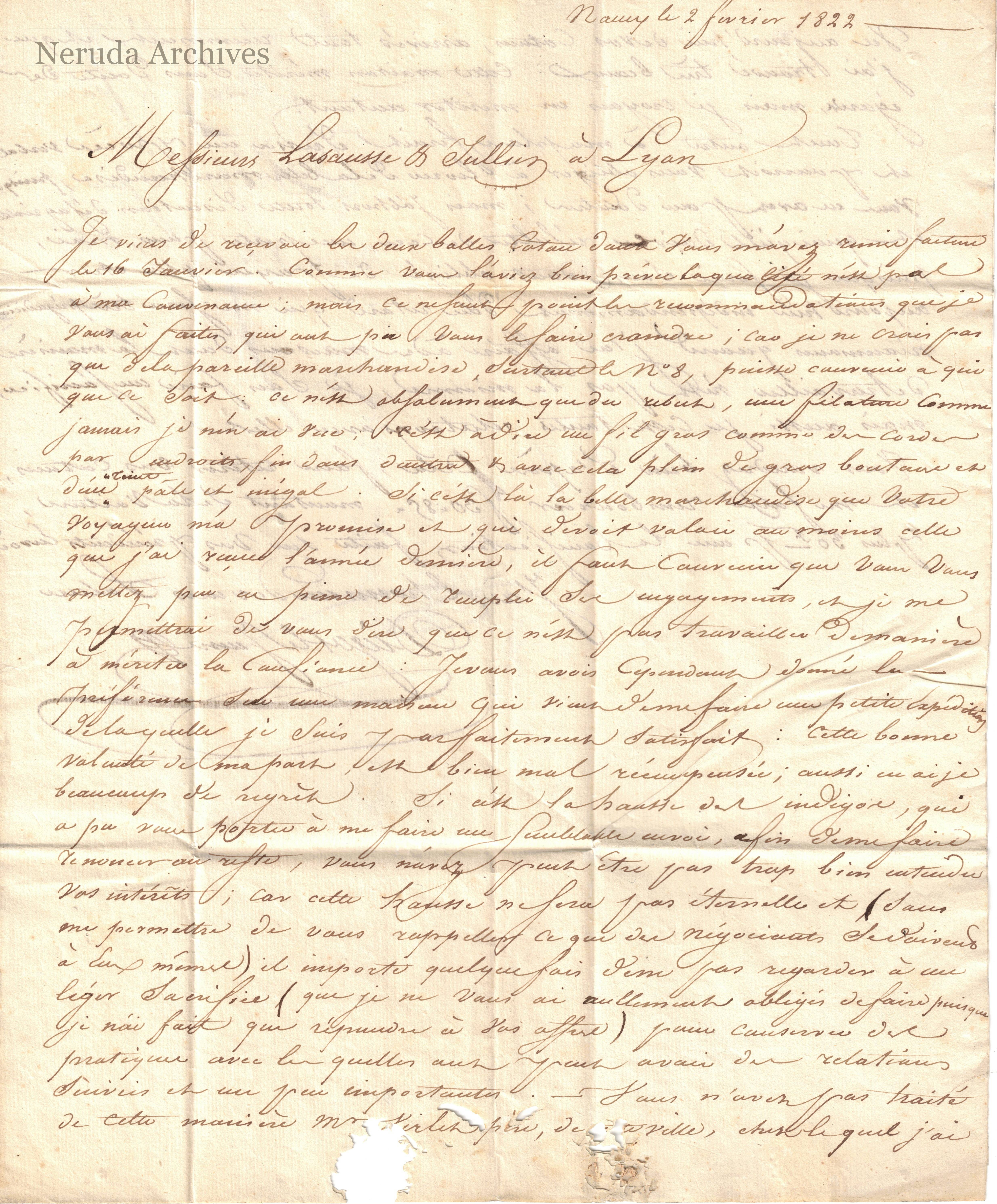
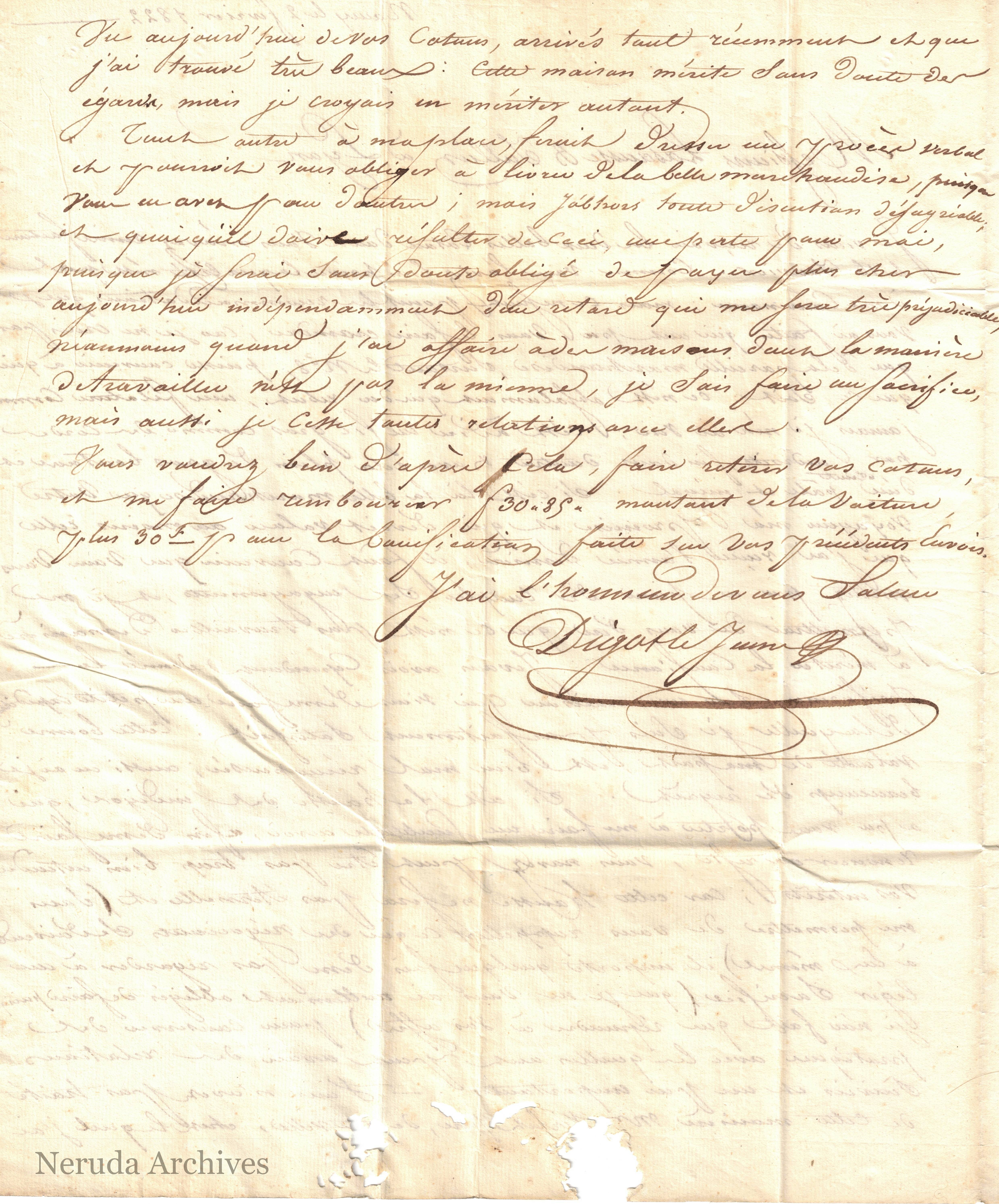
A rejected consignment of spun cotton yarn
The letter was sent from Nancy on 2 February 1822 after Digot le jeune received two bales covered by an invoice dated 16 January. Although the opening calls the goods coton, the repeated use of fil and filature, the reference to No. 8 and the physical complaints all show that the disputed product was spun cotton yarn or thread rather than raw cotton. The writer describes yarn that varies from rope-like thickness to fineness, with knots and an uneven pale colour.[1]
Digot rejects the shipment and asks the recipients to have it collected. He also requests reimbursement of 30 francs 85 centimes for carriage and 30 francs for an earlier allowance or credit. His suggestion that a rise in indigo prices may explain the shipment is explicitly framed as his own supposition, not as an independently established cause.[1]
The recipient firm
The Archives municipales de Lyon independently identify the Lasausse family as merchants and record business correspondence and transport notes for “Lasausse et Jullien” from 1812–1813 and 1839. This confirms the existence and commercial character of the recipient firm, but it does not independently verify the specific January 1822 consignment described by Digot.[1, 2]
Commercial procedure and language
The writer says that another buyer might have had a procès-verbal drawn up and sought to compel delivery of suitable goods. In this context the term denotes a formal procedural record of observations or statements. Digot instead says that he avoids unpleasant disputes, accepts the immediate loss and ends further relations with the firm.[1, 3]
Evidence and limits
The nature of the goods as spun cotton yarn is strongly supported by the manuscript's own terminology and description. The recipient firm is independently documented, but Digot le jeune has not yet been identified outside this letter. The name of the comparison supplier remains uncertain and is therefore omitted from the Context. The letter records Digot's complaint and suspicions; it does not independently establish fraud, the cause of the shipment or legal liability.[1, 2, 3]
Sources & evidence (3)
- Primary source · manuscript Neruda Archives, NRA-L-000031, images 2–3 and reviewed transcript and English translation of the letter dated 2 February 1822; image 1 contains the address panel. View the archive record Supports the goods, quality complaint, invoice date, amounts and the writer's proposed course of action.
- Archival finding aid Archives municipales de Lyon, 1 II/201/1, Papiers de la famille Lasausse, Inventaire 1 II, p. 70. Open the archival description Independently confirms Lasausse et Jullien as a merchant firm with surviving business correspondence and transport records.
- Historical lexicography Centre national de ressources textuelles et lexicales, “Procès-verbal,” legal sense. Read the lexical entry Supports the rendering of procès-verbal as a formal procedural record rather than an ordinary letter or informal complaint.