The court and the new king
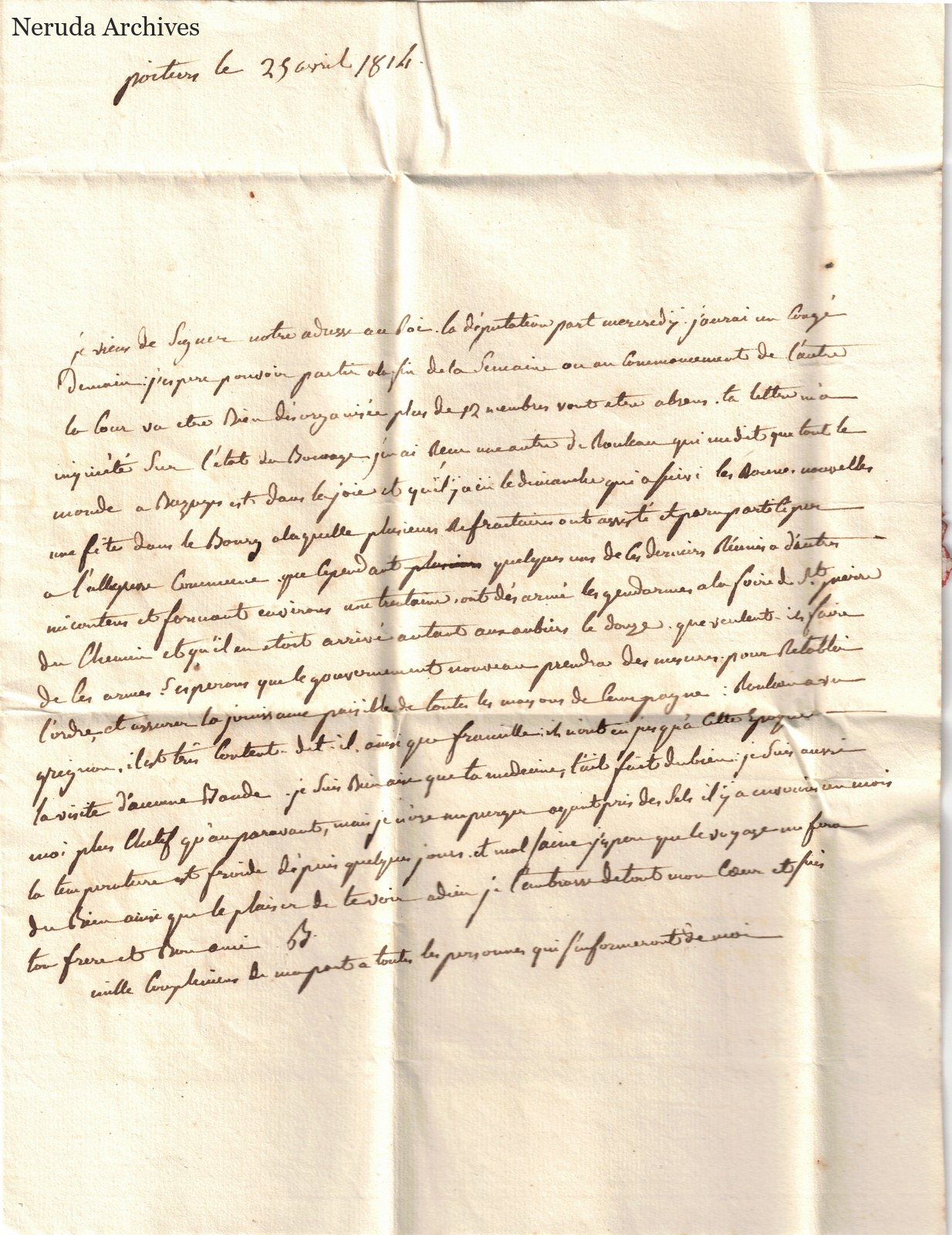
On 6 April 1814 the Senate called Louis-Stanislas-Xavier, Louis XVIII, to the throne. Writing on 25 April, Bouron says he has just signed an address to the king and expects a deputation to leave on Wednesday. The address and deputation show the change of regime reaching a provincial court within weeks. François-Anne-Jacques Bouron is a likely author: he had been a Crown lawyer (avocat du roi) at Fontenay-le-Comte and sat on the court at Poitiers from 1811 to 1818.[1, 2, 3]
Celebration and disquiet
The same letter passes on very different news from the Bocage. According to Rouleau, men who had resisted conscription joined the festivities in Bazoges, yet some of them also took part in disarming gendarmes at the Saint-Pierre-du-Chemin fair. He reports another incident at Les Aubiers on 12 April. The celebrations, the reported seizures and Bouron's concern for rural households all belong to the same unsettled weeks.[1, 2]
Evidence and limits
The letter is signed only B. The court's address and the list of its deputation have not been located. Rouleau's reports are not firsthand testimony by Bouron, and the two incidents have not been independently corroborated.[1, 3]
Sources & evidence (3)
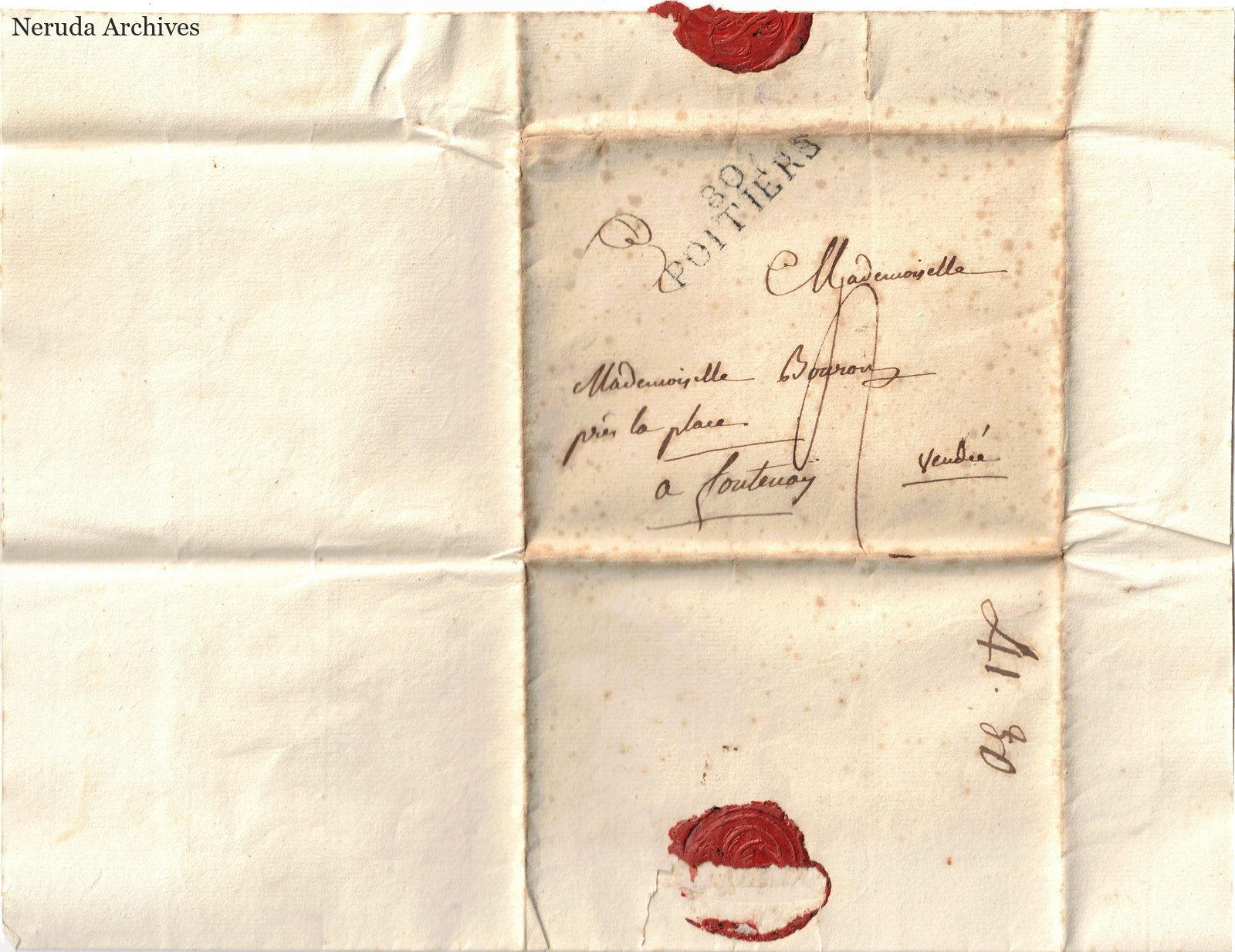
- Primary source: manuscript Neruda Archives, NRA-L-000928, Poitiers, 25 April 1814, letter and address panel. Read the letter and view the cover Records the address to the king and the planned deputation; attributes the news from the Bocage to Rouleau. The signature is B. and the cover is addressed to Mademoiselle Bouron at Fontenay.
- Primary source: proceedings of the Senate Sénat, Extrait des registres du Sénat-conservateur, 6 April 1814, article 2. Read the Senate's 6 April decision The constitutional proposal called Louis-Stanislas-Xavier to the throne. It does not record the Poitiers court's subsequent address.
- Institutional biographical record Assemblée nationale, Sycomore, François, Anne, Jacques Bouron (1752–1832), biography. Check Bouron's early career and Poitiers appointment Records his legal career at Fontenay-le-Comte and office on the Court of Poitiers from 1811 to 1818.