Identity and scope
The historical business represented by this record
Neuchâtel commercial house documented in three signed letters concerning remittances, bills of exchange, shipments and extract.1
Editorial boundary. It is retained separately from the later Bovet et Lerch commission house. The present evidence does not establish full names of the partners; legal continuity before 1811 and after 1820.
Documentary names
Names preserved in the evidence
Forms are ordered by their earliest dated appearance in the archive. The preferred name supports navigation; historical spellings and abbreviations remain searchable and are never silently replaced.
| Name form | Use | Evidence |
|---|---|---|
| Bovet Père & Fils | Preferred name; form recorded in the correspondence | 3 letters, 1811–1820 |
Documented connections
People, places and correspondence
3 letters · 1811-04-21–1820-03-21
3 letters
Evidence in Neruda Archives
Letters connected with this identity
Every link opens the stable public record with manuscript images, transcription, translation and metadata.
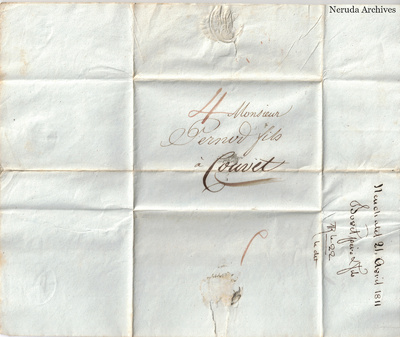
NRA-L-000090 · 1811-04-21
Letter from Bovet Père & Fils to Pernod fils concerning a case and financial instruments, April 21, 1811
Sender as recorded: Bovet Père & Fils
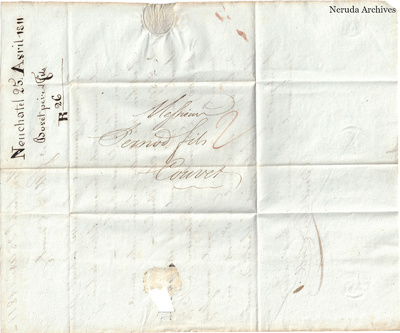
NRA-L-000089 · 1811-04-25
Letter from Bovet Père & Fils to Pernod fils concerning extract and remittances, April 25, 1811
Sender as recorded: Bovet Père & Fils
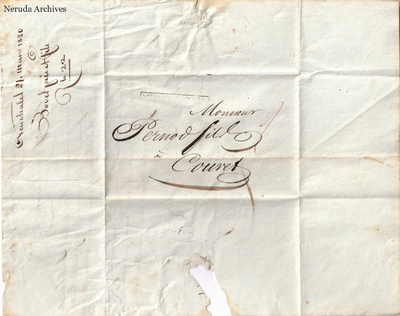
NRA-L-000098 · 1820-03-21
Letter from Bovet Père & Fils to Pernod fils concerning remittances, March 21, 1820
Sender as recorded: Bovet Père & Fils
Sources
Evidence used for this authority
- NRA-L-000089: signed Bovet Père & Fils letter from NeuchâtelNeruda Archives · 2026-08-27
How this identity was established
The linked mentions were joined only after documentary name forms, place, role, date range and surviving business evidence were reviewed together. The local Neruda Archives authority remains primary; a brand, business lineage, historical firm and modern company are not treated as identical without exact supporting evidence.
Future corrections are recorded as new, sourced decisions rather than silently overwriting earlier evidence.